07
2026-09
Automorphic Forms, Automorphic Representations and Related Topics (Fall and Winter Semester 2026)






Video
Inaugurated on December 17, 2017, the Institute for Advanced Study in Mathematics at Zhejiang University aims to provide a tranquil and stimulating environment in which mathematicians from all corners of the world can get together to work, think, and exchange ideas. The Institute has a substantial annual budget provided by Zhejiang University, supplemented by donations and government grants. Surrounded by a lovely forest garden, the institute’s newly-renovated interim building has a usable...
赵以庚 Yigeng Zhao (Westlake University)
Room 204, Hai Na Yuan #2

江瑞 Rui Jiang (Tsinghua University)
Lecture Hall of IASM
David Hansen (National University of Singapore)
Lecture Hall of IASM
Klaus Künnemann (University of Regensburg)
Lecture Hall of IASM

魏树梅 Shumei Wei (The Second Affiliated Hospital Zhejiang University School of Medicine)
Lecture Hall of IASM
张通 Tong Zhang (East China Normal University)
Room 204, Hai Na Yuan #2
The Banff International Research Station (BIRS) addresses the imperatives of collaborative and cross-disciplinary research with a focus on the mathematical sciences and their vast array of applications in the sciences and in industry. Its modus operandi facilitates intense and prolonged interactions between scientists in a secluded environment, complete with accommo dation and board, and the necessary facilities, for uninterrupted research activities in a variety of formats, all in a magnificent mountain setting. BIRS embraces all aspects of the mathematical, computational and statistical sciences from the most fundamental challenges of pure and applied mathematics, theoretical and applied computer science, statistics, and mathe matical physics, to financial and industrial mathematics, as well as the mathematics of information technology, and the life sciences.Inaugurated in 2003, BIRS is a joint Canada-US-Mexico initiative that came about as the result of a remarkably concerted effort led, at the outset of the new millennium, by the Pacific Institute for the Mathematical Sciences (PIMS, Canada) and the Mathematical Sciences Research Institute (MSRI, Berkeley, USA), along with the support of the Mathematics of Information Technology and Complex Systems Network of Centres of Excellence (MITACS, Canada). IASM became the second BIRS Partnership Institutions in 2019. There will be 10 IASM-BIRS workshops in Hangzhou every year.
[Read More]
Blossom
2026-04-02
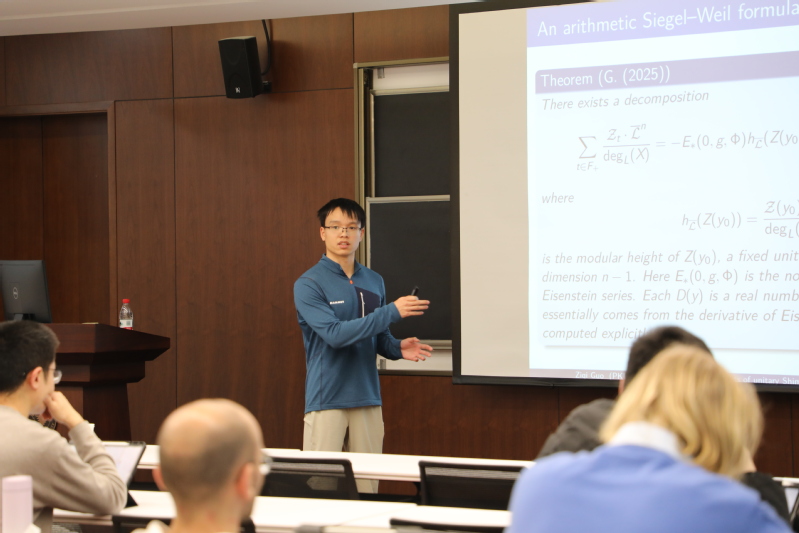
Seminar by Ziqi Guo: Modular h...
2026-03-11
Venue: Lecture Hall of IASMTime: March 11, 16:00 - 17:00Speaker: 郭子棋 Ziqi Guo (Peking University)Abstract: The goal of our work is to prove a formula expressing the modular height of a unitary Shimura variety over a CM number field in terms of the logarithm derivative of the Hecke L-function associated with the CM extension. In a more specific term, we will introduce a global canonical integral model of such a unitary Shimura variety, and compute the arithmetic top self-intersection number of a canonical arithmetic line bundle with Hermitian metric on such integral model. At the same time, we also delve into a thorough investigation of the arithmetic generating series of divisors on unitary Shimura varieties. Therefore, we will also obtain the so-called arithmetic Siegel–Weil formula in our setting.
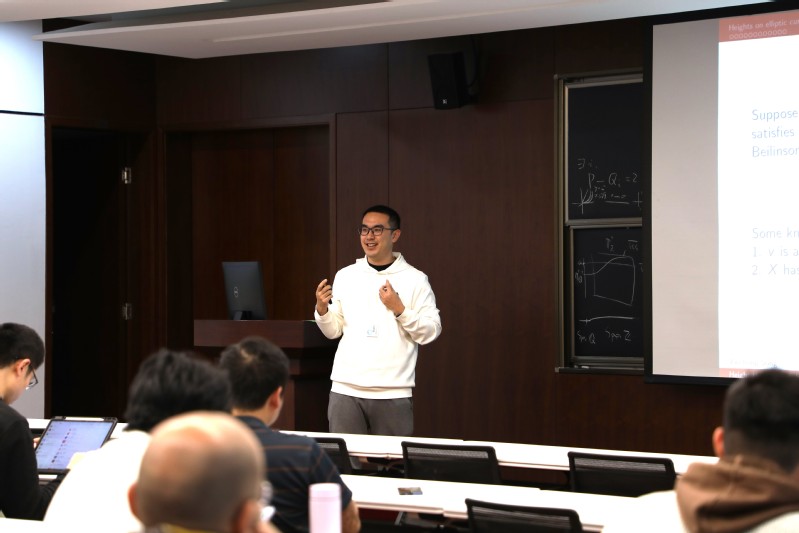
Seminar by Yinchnog Song: Heig...
2026-03-04
Venue: Lecture Hall of IASMTime: March 4, 16:00 - 17:00Speaker: 宋寅翀 Yinchong Song (Peking University)Abstract: In this talk we first give an introduction to height theories and Arakelov geometry, including heights on elliptic curves, various ways to define a height function, and some important theorems and applications of Arakelov geometry. After that we focus on Yuan–Zhang's adelic line bundles and Beilinson–Bloch heights. In the end we will discuss my recent work about Beilinson–Bloch heights.
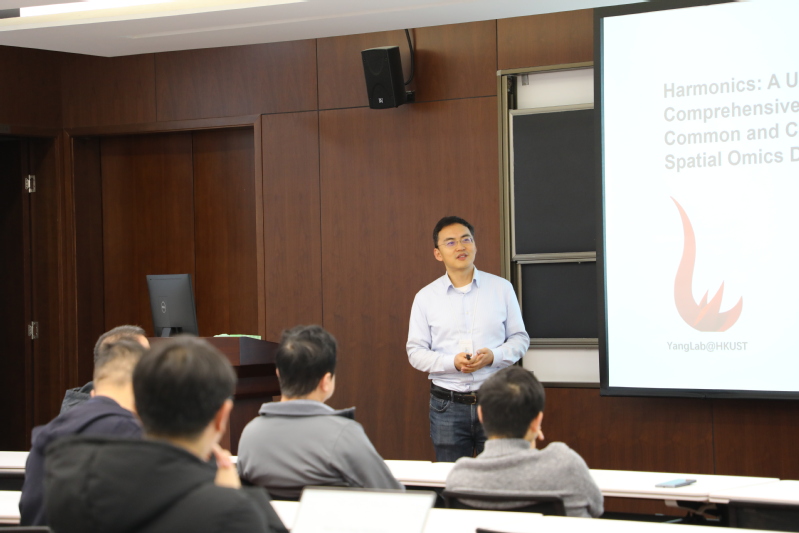
Lectures by Can Yang: Hierarch...
2026-03-04
Time: March 4, WednesdayVenue: Lecture Hall of IASMSpeaker: 杨灿 Can Yang (Hong Kong University of Science and Technology)Lecture I: Hierarchical distribution matching enables comprehensive characterization of common and condition-specific cell niches in spatial omics dataTime: 10:00 -11:00Abstract: Deciphering cell niches in complex tissues is essential for understanding tissue structure and disease. Recent advances in spatial omics have enabled subcellular resolution and accurate cell identity mapping. However, robust delineation of cell niches and disease-associated spatial patterns remains difficult. We introduce Harmonics, a novel computational framework that systematically identifies both common and condition-specific cell niches from spatial omics data through hierarchical distribution matching. Harmonics also includes a suite of downstream modules that facilitate comprehensive niche characterization. We demonstrate its scalability, accuracy and generalizability across datasets spanning diverse species, tissues, diseases, spatial modalities, and technological platforms. For condition-agnostic datasets, Harmonics outperforms baseline methods in both accuracy and robustness, and further demonstrates the capability to resolve niche structures at finer granularity. Across diverse diseases including pulmonary fibrosis, triple-negative breast cancer, and colorectal cancer, Harmonics enables precise identification of condition-specific niches and reveals disease-associated dynamics, subtype-specific spatial patterns, and structured immune architectures. We envision Harmonics as a practical and versatile tool for spatial niche analysis that can be applied across a wide range of biological contexts and seamlessly integrated with existing spatial omics workflows. This is a joint work with our lab members, Yuyao Liu, Jiashun Xiao, Xiaoheng Ma, Xiaomeng Wan, Peiqi Jiang, Zhiwei Wang, and Yuheng Chen.Lecture II: A statistical framework for identification of cell-type-specific spatially variable genes in spatial transcriptomic studiesTime: 14:00 -15:00Abstract: Characterizing cell-type-specific spatially variable genes (SVGs) within tissue context is essential for exploring the landscape of complex biological systems in spatial transcriptomic (ST) studies. In this paper, we present a statistical framework, the Mixture of Mixed Models (MMM), designed to directly model RNA count data and identify cell-type-specific SVGs while accounting for cell type composition and correcting for platform effects. Through a comprehensive simulation study and the analyses of eight publicly available ST datasets from various tissues and technologies with different resolutions, we demonstrate the effectiveness and robustness of MMM in identifying cell-type-specific SVGs. Notably, our integrative analysis with genome-wide association studies reveals that the cell-type-specific SVGs identified by MMM in a mouse brain study exhibit significant heritability enrichment in brain-related phenotypes. This finding suggests that cell-type-specific SVGs play a vital role in elucidating the mechanisms underlying complex traits and diseases. When applying MMM to analyze a high-resolution Xenium human breast cancer dataset by accounting for the uncertainties in cell segmentation, we find that certain cell-type-specific SVGs may contribute to cell–cell communications, thereby regulating the tissue microenvironment. Furthermore, we show the versatility of MMM by applying it to the 3D tissue models constructed from multiple ST slices, highlighting its utility in analyzing the 3D ST data. This is a joint work with Zhiwei Wang, Yeqin Zeng, Ziyue Tan, Yuheng Chen, Xinrui Huang, Hongyu Zhao, and Zhixiang Lin. https://doi.org/10.1073/pnas.2503952122Profile: Prof. Yang Can is currently a Professor in the Department of Mathematics at The Hong Kong University of Science and Technology (HKUST), where he also serves as the Director of the Big Data Bio-Intelligence Lab (BDBI). He holds several editorial positions, including Associate Editor for the Annals of Applied Statistics, Section Editor for PLOS Computational Biology, and Associate Editor for Genetics and Human Genetics and Genomics Advances. His research specializes in data science, focusing on the development of novel statistical and computational methods for large-scale data analysis, including deep generative models and scalable AI algorithms. Prof. Yang's work has been published in high-impact journals and at prestigious machine learning conferences, including Nature, Nature Machine Intelligence, Nature Computational Science, Nature Communications, Proceedings of the National Academy of Sciences (PNAS), Annals of Statistics, IEEE Transactions on Pattern Analysis and Machine Intelligence, The American Journal of Human Genetics, and the International Conference on Machine Learning. Prof. Yang has also fostered industrial collaborations supported by the Innovation and Technology Fund of the Hong Kong Government.
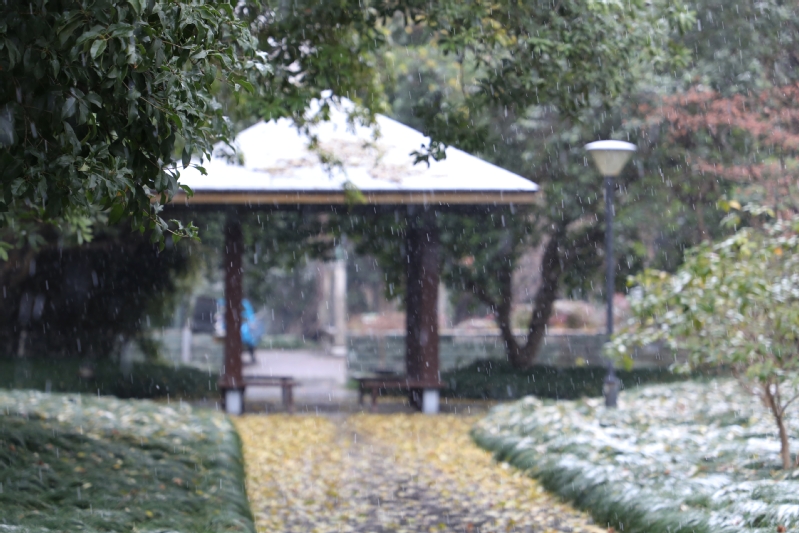
Flow with the Snow
2026-01-20
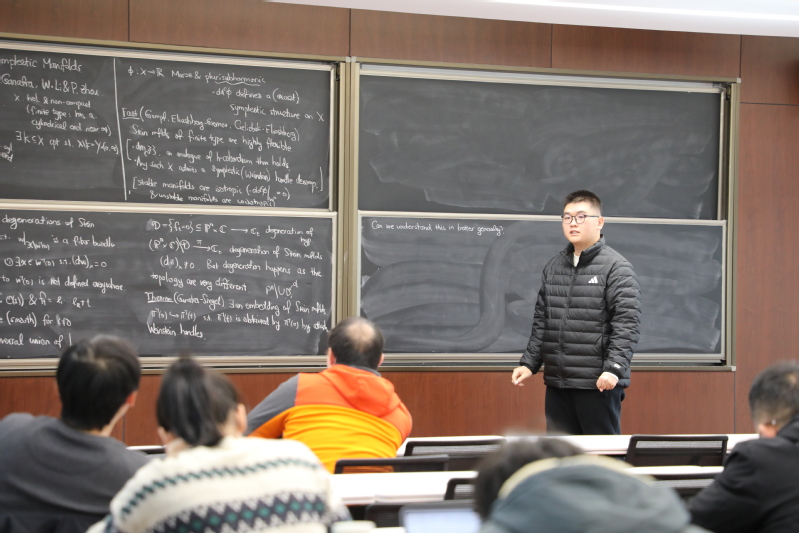
Seminar by Siyang Liu: Symplec...
2026-01-12
Venue: Lecture Hall of IASMTime: 10:30 - 11:50, January 12Speaker: 刘思阳 Si-Yang Liu (University of Bonn)Pretalk: Categorification of Fixed PointsAbstract: One important goal of classical mechanics is to understand periodic orbits of motions of particles. Via Hamiltonian formalism, this can be rephrased as fixed points of certain self-diffeomorphisms of a given manifold. There are conjectures relating such fixed points to the topology of spaces, which were resolved via “categorifying fixed points.”Research talk: Symplectic Geometry of DegenerationsAbstract: Degeneration of algebraic varieties is a classical but powerful way of studying algebraic and symplectic geometry. While algebraic structures vary in a family, their de Rham cohomologies remain locally constant, leading to Schmid’s construction of mixed Hodge structures that essentially describes the geometry of the degenerate variety. Symplectic structures behave similarly, and one expects a parallel localization formula relating the symplectic geometry of a smooth fiber to that of a degenerate fiber. In this talk, I will discuss a special case where this philosophy can be translated into concrete statements and some applications. This is based on joint work in preparation with Sheel Ganatra, Wenyuan Li, and Peng Zhou.
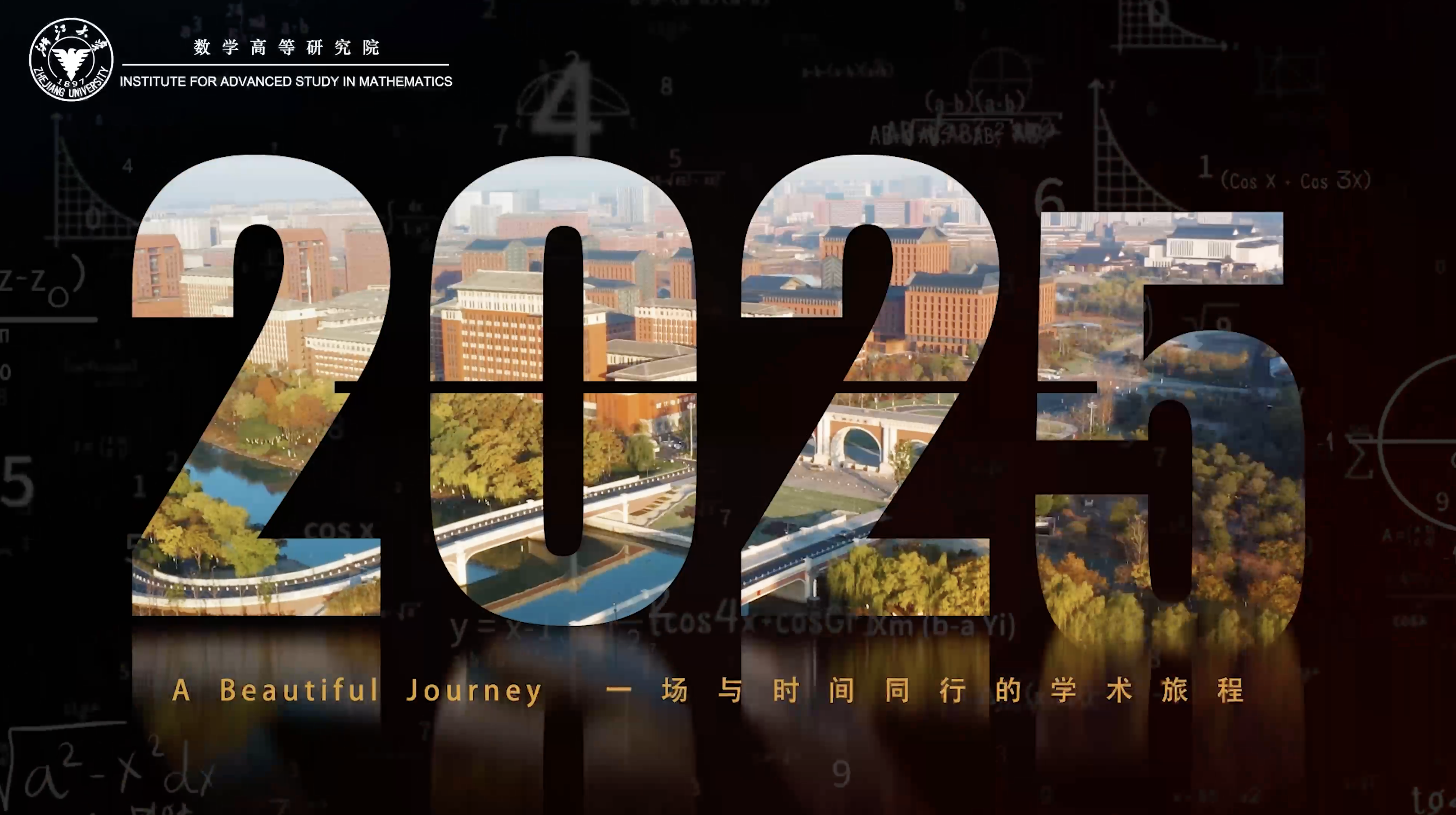
A Beautiful Journey —— IASM202...
2026-01-06
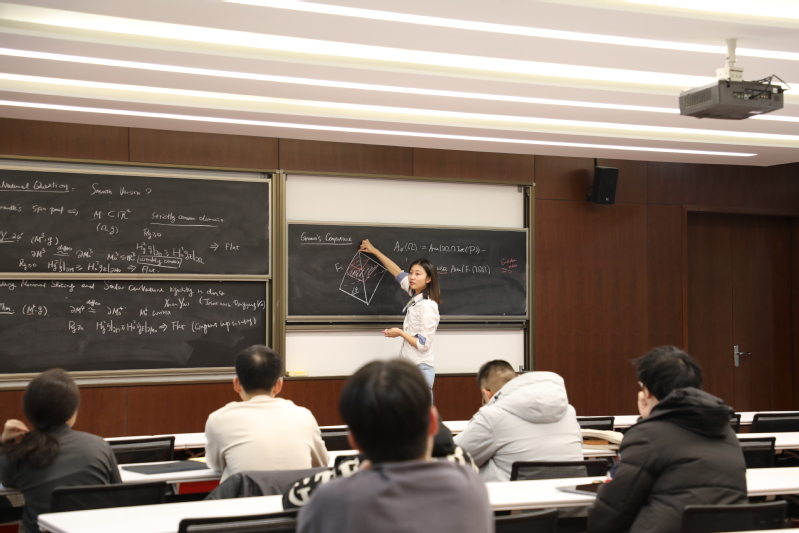
Seminar by Xuan Yao: Capillary...
2026-01-06
Venue: Lecture Hall of IASMTime: 14:30-15:50, January 6Speaker: 姚萱 Xuan Yao (Princeton University)Pretalk: Schoen-Yau’s minimal slicing technique and its applications on the positive scalar curvature problemAbstract: We introduce Schoen-Yau’s minimal slicing technique and their proof of Geroch conjecture in low dimensions.Research talk: Capillary minimal slicing and scalar curvature rigidity in dimension 4Abstract: We develop a capillary minimal slicing technique and use it to prove a scalar curvature rigidity result in dimension 4. This is a joint work with Dongyeong Ko.

Donggun Lee: Representations on the cohomology of the moduli space of pointed rational curves
Abstract: The moduli space of pointed rational curves carries a natural action of the symmetric group permuting the marked points. In this talk, I will present combinatorial and recursive formulas for the induced representations on its cohomology. These formulas are obtained by relating the representation to that of the moduli space with one additional marked point fixed under the symmetric group ...
Read More
Fei Yu: Gorenstein Singularities, Moduli of Differentials, and the Topology of Strata
Abstract: I will discuss joint work with Dawei Chen on a construction which associates to a holomorphic differential a Gorenstein curve singularity with Gm-action. It identifies strata of differentials with smooth loci in negatively graded deformation spaces of the associated singularities, and gives a framework for studying their boundary, birational geometry, topology, and categorical invar...
Read More
Mirko Mauri:Baily--Borel compactifications of period images and the b-semiampleness conjecture
Abstract. Semiampleness criteria are subtle foundational statements in algebraic geometry. In this talk, I present a new semiampleness result for the Hodge bundle of certain Calabi–Yau variations of Hodge structure. This result is a key ingredient in the proof of two long-standing conjectures: Griffiths’ conjecture on functorial compactifications of images of period maps, and the b-semiampleness ...
Read More

The Institute for Advanced Study in Mathematics (IASM) at Zhejiang University invites applications for multiple postdoctoral positions in all major areas of Pure Mathematics. Candidates should hold a Ph.D. degree in mathematics and demonstrate outstanding promises in both research and teaching.
Starting from this hiring cycle, the IASM will offer two types of postdoctoral positions: the newly launched Qiushi Fellow and the traditional Postdoctoral researcher. Both types of positions will start on September 1st, 2027 by default (negotiable in special cases).
The Qiushi Fellow is a distinguished three-year position that is open to candidates who have already demonstrated outstanding achievements in research. It offers an internationally competitive salary and is endowed with a generous amount of travel funding. The fellowship includes teaching one course per academic year at the School of Mathematical Sciences. The course may be taught in English and may be chosen according to the candidate's preferences.
The Postdoctoral researcher is a two-year position for researchers in the early stages of their career, possibly extendable by an additional year.
The deadline for applications is December 15th, 2026 (applications submitted after the deadline might be considered but not guaranteed). All applications will be considered for both types of positions.
Candidates should furnish a placement dossier consisting of:
- a cover letter
- a curriculum vitae
- a research statement
- a teaching statement
- three letters of recommendation addressing research (to be provided directly by the referees).
In addition, you are encouraged (but not required) to identify a potential mentor who is a faculty member of the IASM (http://www.iasm.zju.edu.cn/). Application materials should be submitted electronically through the AMS website https://www.mathjobs.org/.
Candidates from all nations and ethnic backgrounds are encouraged to apply. Further information about the IASM at Zhejiang University can be found at http://www.iasm.zju.edu.cn/.
Your donation is vital to the development of the Institutue for Advanced Study in Mathematics (IASM).
Please indicate the purpose ( "for IASM, 支持浙江大学教育基金会数学高等研究院发展基金") when you donate to the account of Zhejiang University Education Foundation, so that the donation can be directed to us.
How To Give
Address
East No.7 Building, Zhejiang University Zijingang Campus, HangzhouTEL
+86-571-88208763