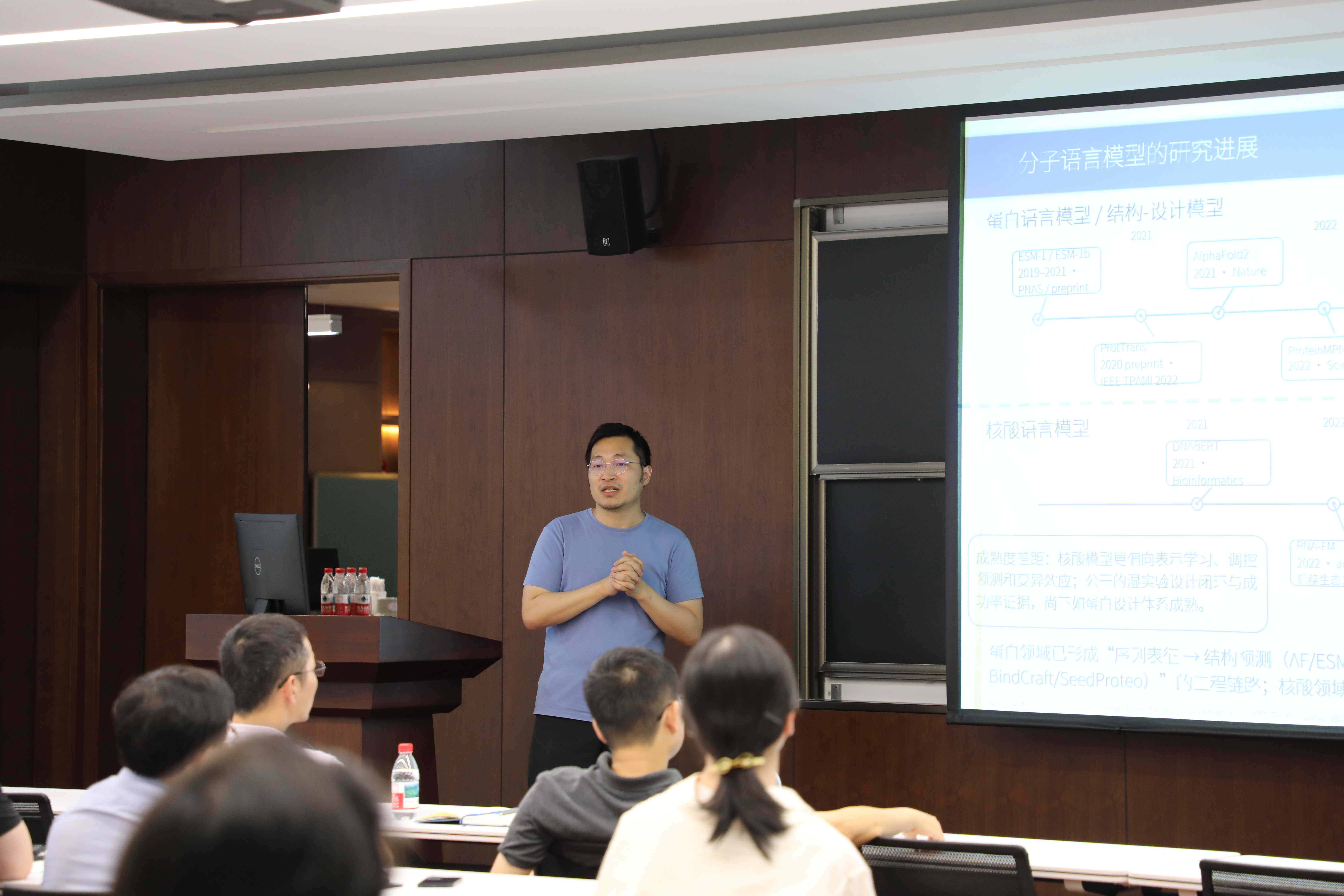


以表观智能体解读单细胞表观基因组语言
走进研究院
浙江大学数学高等研究院于2017年12月17日成立。研究院将依靠自己的核心团队和国际同行,实行独立的学术判断和学术评价,努力打造世界一流的数学研究中心。我们的目标是在数学高等研究院汇聚一流学者,在安静的工作环境和浓厚的学术氛围中,思考重要的数学问题、产生重要的数学思想、取得一流的数学成果。 数学高等研究院将致力于打造一个由数学家、工作人员以及认同高等研究院理念和情怀的各方朋友所组成的学术与理想的共同体。在催生一流的数学思想和数学成果的同时,这个共同体也将是我们思想和文化交流的共同家园。浙江大学数学高等研究院得到浙江大学常年的稳定支持,同时也接受来自社会各方的捐赠。研究院过渡办公场地位于浙江大学紫金...
David Hansen (新加坡国立大学)
数学高等研究院报告厅
7.13 - 21
数学高等研究院报告厅
Klaus Künnemann (雷根斯堡大学)
数学高等研究院报告厅
魏树梅(浙江大学附属第二医院)
数学高等研究院报告厅
张通 Tong Zhang(华东师范大学)
海纳苑2幢204室
曹亚龙 Yalong Cao(晨兴数学中心)
数学高等研究院报告厅
The Banff International Research Station (BIRS) addresses the imperatives of collaborative and cross-disciplinary research with a focus on the mathematical sciences and their vast array of applications in the sciences and in industry. Its modus operandi facilitates intense and prolonged interactions between scientists in a secluded environment, complete with accommo dation and board, and the necessary facilities, for uninterrupted research activities in a variety of formats, all in a magnificent mountain setting. BIRS embraces all aspects of the mathematical, computational and statistical sciences from the most fundamental challenges of pure and applied mathematics, theoretical and applied computer science, statistics, and mathe matical physics, to financial and industrial mathematics, as well as the mathematics of information technology, and the life sciences.Inaugurated in 2003, BIRS is a joint Canada-US-Mexico initiative that came about as the result of a remarkably concerted effort led, at the outset of the new millennium, by the Pacific Institute for the Mathematical Sciences (PIMS, Canada) and the Mathematical Sciences Research Institute (MSRI, Berkeley, USA), along with the support of the Mathematics of Information Technology and Complex Systems Network of Centres of Excellence (MITACS, Canada). IASM became the second BIRS Partnership Institutions in 2019. There will be 10 IASM-BIRS workshops in Hangzhou every year.Visit this website for more information about BIRS
[Read More]
露台的紫藤终于开了
2026-04-02
数论与表示论讨论班:郭子棋 Mod...
2026-03-11
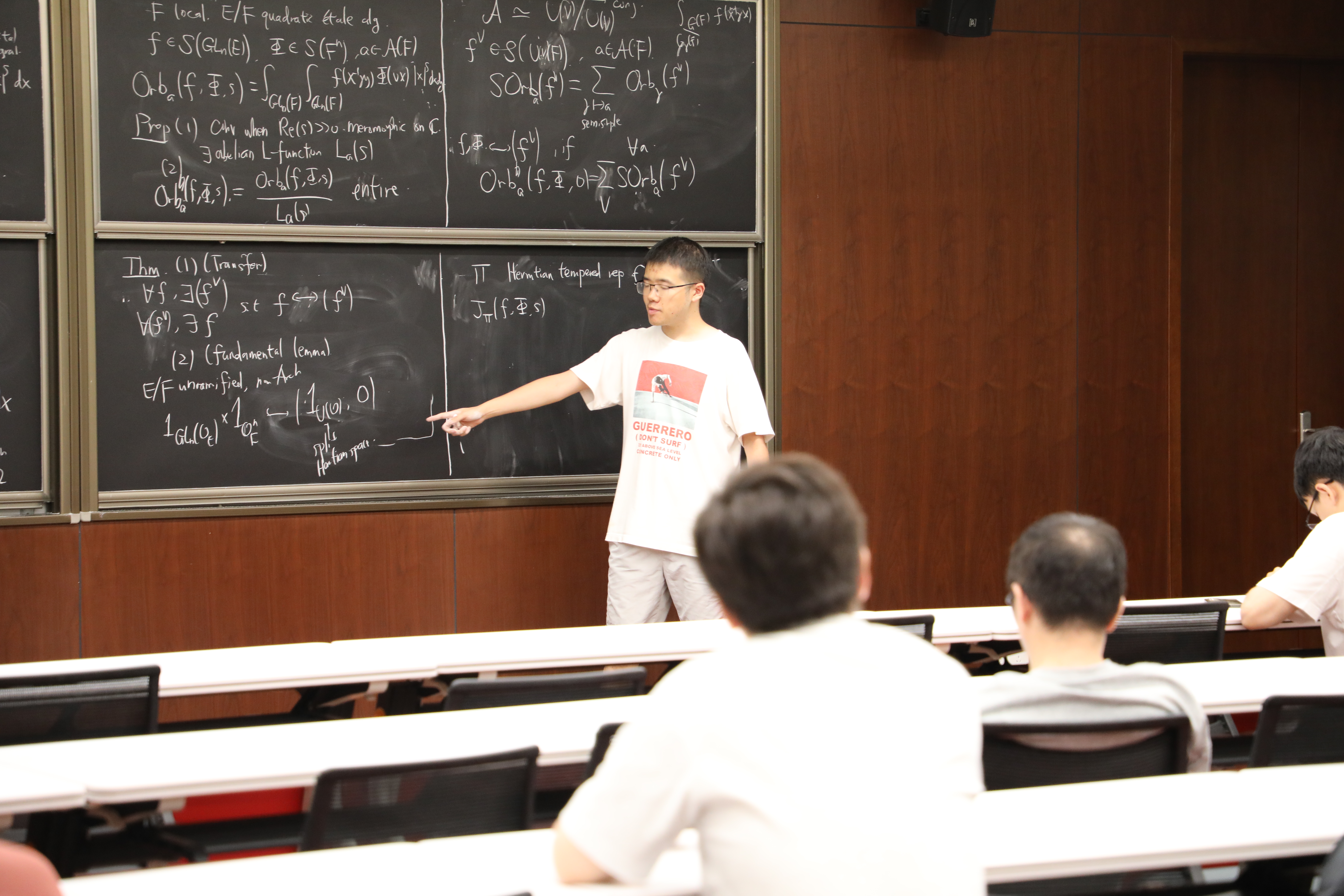
地点: 数学高等研究院报告厅时间: 3月11日,16:00 - 17:00主讲人: 郭子棋 Ziqi Guo (北京大学)摘要:The goal of our work is to prove a formula expressing the modular height of a unitary Shimura variety over a CM number field in terms of the logarithm derivative of the Hecke L-function associated with the CM extension. In a more specific term, we will introduce a global canonical integral model of such a unitary Shimura variety, and compute the arithmetic top self-intersection number of a canonical arithmetic line bundle with Hermitian metric on such integral model. At the same time, we also delve into a thorough investigation of the arithmetic generating series of divisors on unitary Shimura varieties. Therefore, we will also obtain the so-called arithmetic Siegel–Weil formula in our setting.
数论与表示论讨论班:宋寅翀 Heig...
2026-03-04
地点: 数学高等研究院报告厅时间: 3月4日,16:00 - 17:00主讲人: 宋寅翀 Yinchong Song (北京大学)摘要:In this talk, we first give an introduction to height theories and Arakelov geometry, including heights on elliptic curves, various ways to define a height function, and some important theorems and applications of Arakelov geometry. After that, we focus on Yuan–Zhang's adelic line bundles and Beilinson–Bloch heights. In the end, we will discuss my recent work about Beilinson–Bloch heights.
IASM特邀报告:杨灿 Hierarchica...
2026-03-04
日期: 2026年3月4日地点: 数学高等研究院报告厅报告人:杨灿 Can Yang (香港科技大学)报告1:Hierarchical distribution matching enables comprehensive characterization of common and condition-specific cell niches in spatial omics data时间:10:00 -11:00摘要:Deciphering cell niches in complex tissues is essential for understanding tissue structure and disease. Recent advances in spatial omics have enabled subcellular resolution and accurate cell identity mapping. However, robust delineation of cell niches and disease-associated spatial patterns remains difficult. We introduce Harmonics, a novel computational framework that systematically identifies both common and condition-specific cell niches from spatial omics data through hierarchical distribution matching. Harmonics also includes a suite of downstream modules that facilitate comprehensive niche characterization. We demonstrate its scalability, accuracy and generalizability across datasets spanning diverse species, tissues, diseases, spatial modalities, and technological platforms. For condition-agnostic datasets, Harmonics outperforms baseline methods in both accuracy and robustness, and further demonstrates the capability to resolve niche structures at finer granularity. Across diverse diseases including pulmonary fibrosis, triple-negative breast cancer, and colorectal cancer, Harmonics enables precise identification of condition-specific niches and reveals disease-associated dynamics, subtype-specific spatial patterns, and structured immune architectures. We envision Harmonics as a practical and versatile tool for spatial niche analysis that can be applied across a wide range of biological contexts and seamlessly integrated with existing spatial omics workflows. This is a joint work with our lab members, Yuyao Liu, Jiashun Xiao, Xiaoheng Ma, Xiaomeng Wan, Peiqi Jiang, Zhiwei Wang, and Yuheng Chen.报告2:A statistical framework for identification of cell-type-specific spatially variable genes in spatial transcriptomic studies时间:14:00 -15:00摘要:Characterizing cell-type-specific spatially variable genes (SVGs) within tissue context is essential for exploring the landscape of complex biological systems in spatial transcriptomic (ST) studies. In this paper, we present a statistical framework, the Mixture of Mixed Models (MMM), designed to directly model RNA count data and identify cell-type-specific SVGs while accounting for cell type composition and correcting for platform effects. Through a comprehensive simulation study and the analyses of eight publicly available ST datasets from various tissues and technologies with different resolutions, we demonstrate the effectiveness and robustness of MMM in identifying cell-type-specific SVGs. Notably, our integrative analysis with genome-wide association studies reveals that the cell-type-specific SVGs identified by MMM in a mouse brain study exhibit significant heritability enrichment in brain-related phenotypes. This finding suggests that cell-type-specific SVGs play a vital role in elucidating the mechanisms underlying complex traits and diseases. When applying MMM to analyze a high-resolution Xenium human breast cancer dataset by accounting for the uncertainties in cell segmentation, we find that certain cell-type-specific SVGs may contribute to cell–cell communications, thereby regulating the tissue microenvironment. Furthermore, we show the versatility of MMM by applying it to the 3D tissue models constructed from multiple ST slices, highlighting its utility in analyzing the 3D ST data. This is a joint work with Zhiwei Wang, Yeqin Zeng, Ziyue Tan, Yuheng Chen, Xinrui Huang, Hongyu Zhao, and Zhixiang Lin. https://doi.org/10.1073/pnas.2503952122报告人简介:Prof. Yang Can is currently a Professor in the Department of Mathematics at The Hong Kong University of Science and Technology (HKUST), where he also serves as the Director of the Big Data Bio-Intelligence Lab (BDBI). He holds several editorial positions, including Associate Editor for the Annals of Applied Statistics, Section Editor for PLOS Computational Biology, and Associate Editor for Genetics and Human Genetics and Genomics Advances. His research specializes in data science, focusing on the development of novel statistical and computational methods for large-scale data analysis, including deep generative models and scalable AI algorithms. Prof. Yang's work has been published in high-impact journals and at prestigious machine learning conferences, including Nature, Nature Machine Intelligence, Nature Computational Science, Nature Communications, Proceedings of the National Academy of Sciences (PNAS), Annals of Statistics, IEEE Transactions on Pattern Analysis and Machine Intelligence, The American Journal of Human Genetics, and the International Conference on Machine Learning. Prof. Yang has also fostered industrial collaborations supported by the Innovation and Technology Fund of the Hong Kong Government.
IASM的初雪
2026-01-20
几何与拓扑讨论班:刘思阳 Categ...
2026-01-12
地点:数学高等研究院报告厅时间:1月12日,10:30 - 11:50报告人:刘思阳 Si-Yang Liu(波恩大学)摘要: Pretalk: Categorification of Fixed PointsAbstract: One important goal of classical mechanics is to understand periodic orbits of motions of particles. Via Hamiltonian formalism, this can be rephrased as fixed points of certain self-diffeomorphisms of a given manifold. There are conjectures relating such fixed points to the topology of spaces, which were resolved via “categorifying fixed points.”Research talk: Symplectic Geometry of DegenerationsAbstract: Degeneration of algebraic varieties is a classical but powerful way of studying algebraic and symplectic geometry. While algebraic structures vary in a family, their de Rham cohomologies remain locally constant, leading to Schmid’s construction of mixed Hodge structures that essentially describes the geometry of the degenerate variety. Symplectic structures behave similarly, and one expects a parallel localization formula relating the symplectic geometry of a smooth fiber to that of a degenerate fiber. In this talk, I will discuss a special case where this philosophy can be translated into concrete statements and some applications. This is based on joint work in preparation with Sheel Ganatra, Wenyuan Li, and Peng Zhou.
一场与时间同行的学术旅程——IASM...
2026-01-06
几何与拓扑讨论班:姚萱 Capilla...
2026-01-06
地点:数学高等研究院报告厅时间:1月6日,14:30 - 15:50报告人:姚萱 Xuan Yao(普林斯顿大学)摘要: Pretalk: Schoen-Yau’s minimal slicing technique and its applications on the positive scalar curvature problemAbstract: We introduce Schoen-Yau’s minimal slicing technique and their proof of Geroch conjecture in low dimensions.Research talk: Capillary minimal slicing and scalar curvature rigidity in dimension 4Abstract: We develop a capillary minimal slicing technique and use it to prove a scalar curvature rigidity result in dimension 4. This is a joint work with Dongyeong Ko.
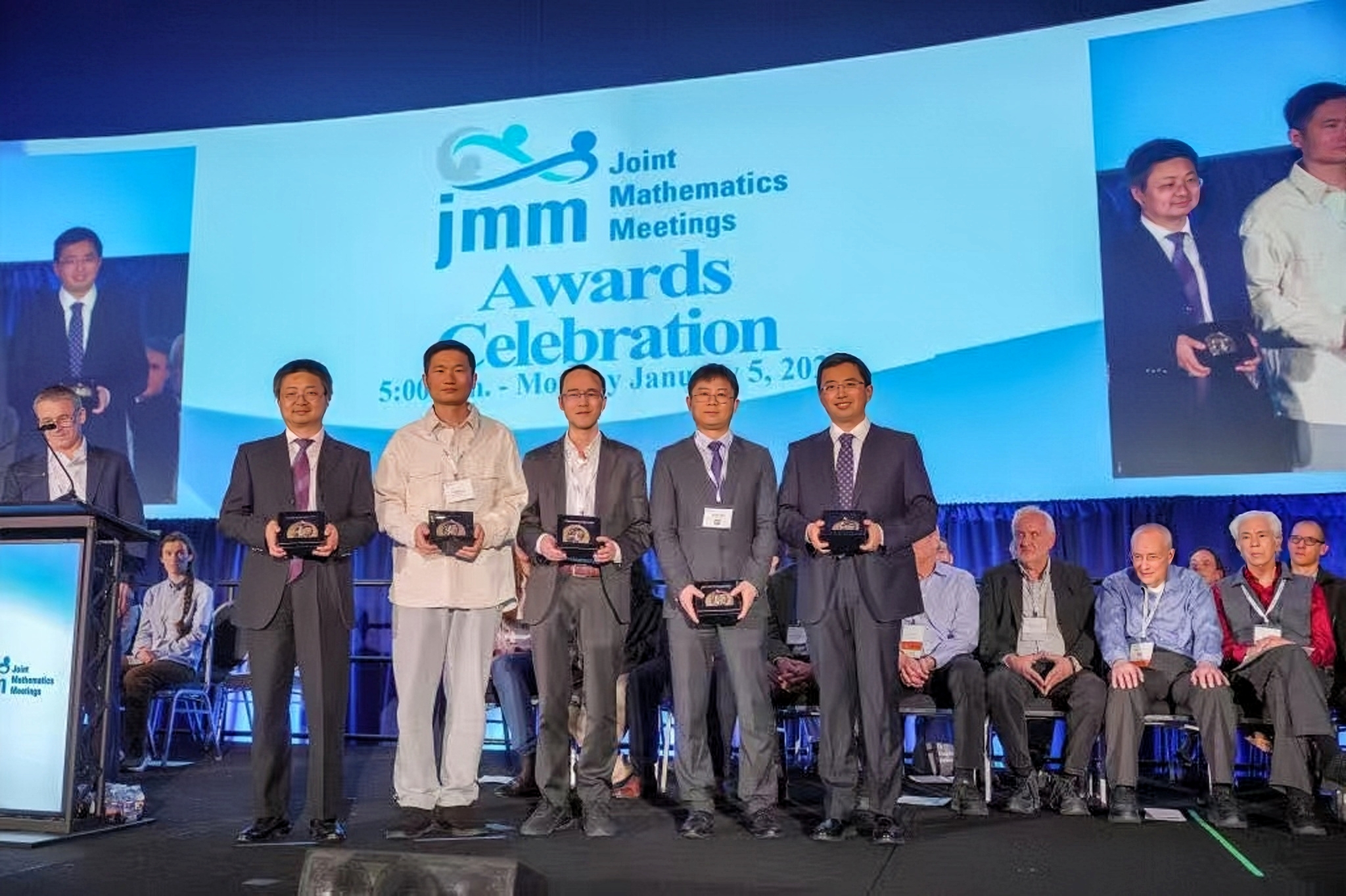
祝贺!数高院刘一峰教授获2025年度Alexanderson奖
2026-01-13
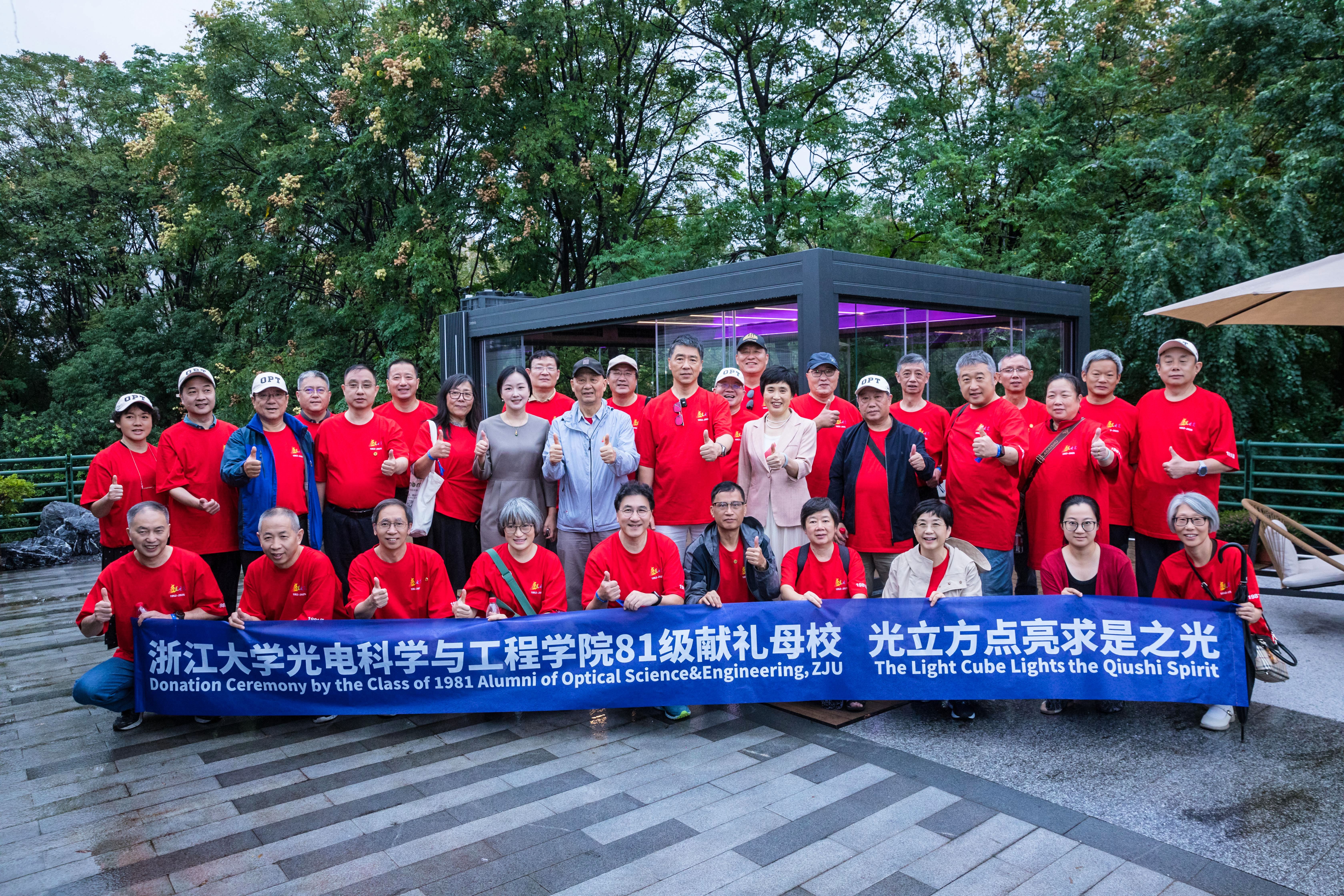
捐赠仪式 | 求是之光 智映未来
2025-10-18
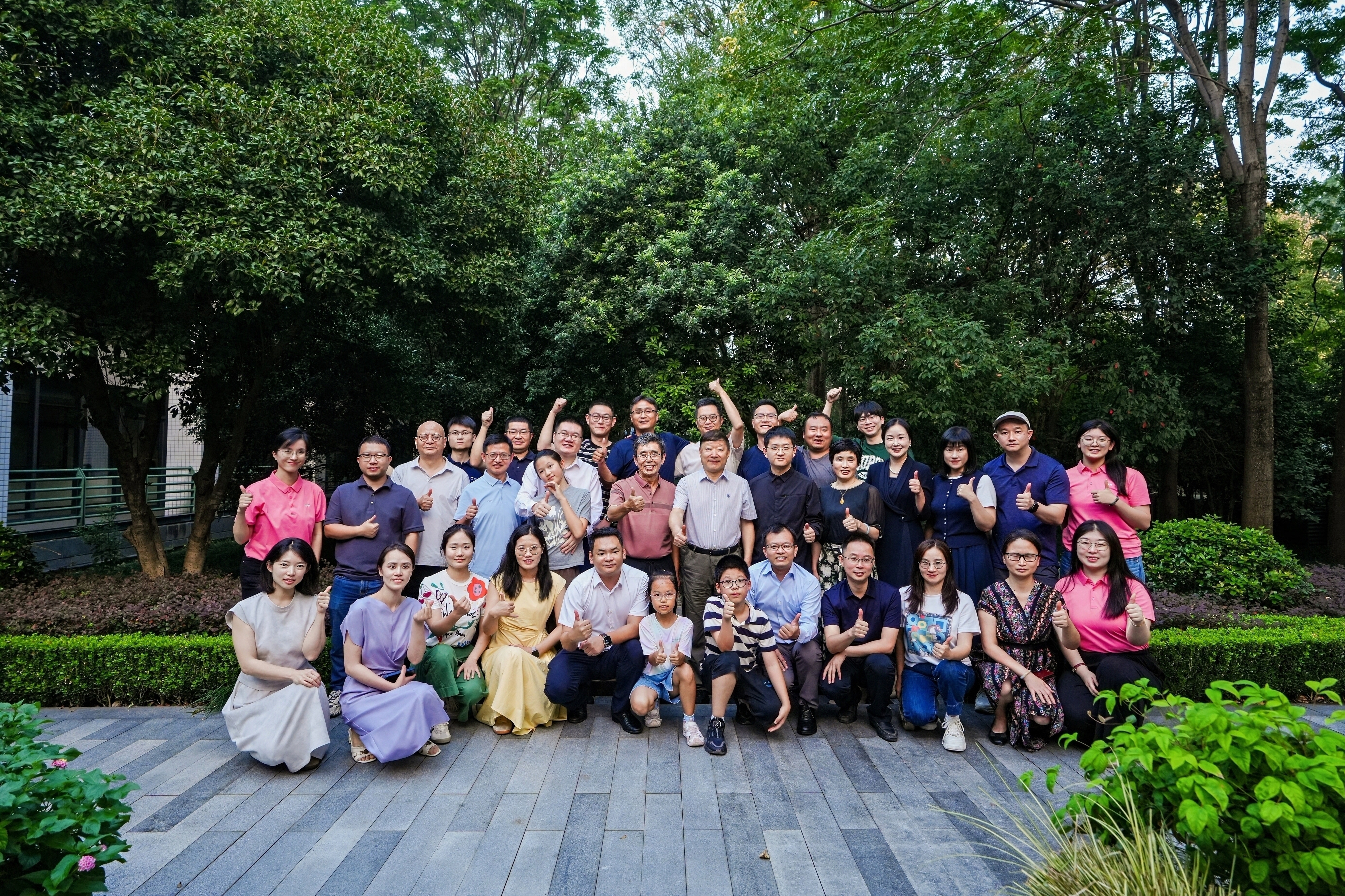
捐赠仪式 | 以数学之名,赴一场秋日之约
2025-10-12
数与对称——2024未来科学大奖与浙江大学联合学术报告会举行
2024-10-09
数高院孙崧教授在Acta Mathematica上发表文章
2024-09-09
Collapsing geometry of hyperkähler 4-manifolds and applicationsActa Math., 232 (2024), 325–424 by Song Sun, Ruobing Zhang AbstractWe investigate the collapsing geometry of hyperkähler 4-mani...
祝贺!数高院孙斌勇教授获“2024未来科学大奖”
2024-08-16
数高院刘一峰教授接连取得重大学术突破
2024-03-29
数高院刘一峰教授在Inventiones mathematicae上发表文章
2024-02-23
A p-adic arithmetic inner product formulaInventiones mathematicae volume 236, pages 219–3751 (2024) by Daniel Disegni & Yifeng LiuAbstractFix a prime number p and l...
孙崧教授正式加入浙江大学数学高等研究院
2024-01-01
2024年1月1日,研究院迎来第五位永久成员孙崧教授。孙崧,1987年2月出生,中国籍,安徽安庆人,教授。中国科技大学学士(2003年-2006年),美国威斯康星大学麦迪逊分校博士(2006年-2010年)。先后任职...
浙江大学数学高等研究院面向全球公开招聘基础数学各主要领域的博士后研究员若干名。应聘者需已取得数学博士学位,在学术研究及教学方面展现卓越潜质。
自本轮招聘起,研究院设立两类博士后岗位:求是博士后研究员与博士后研究员。两个岗位入职时间均为2026年9月1日(特殊情况可协商)。
求是博士后:为期三年的卓越人才计划。面向已在科研领域取得突出成就的申请人,提供具有国际竞争力的薪酬待遇与充足的学术交流经费。求是博士后每学年需在数学科学学院承担一门课程教学任务(可选英文授课,课程内容可结合候选人专长商定)。
博士后研究员:基础科研职位,为期两年(视情况可申请延长一年),旨在支持处于职业生涯初期的科研人员成长。
申请截止日期为2025年12月15日(逾期提交的申请将酌情考虑,但不保证受理)。所有申请将自动参与两类岗位遴选。申请人需提交完整的申请材料,内容包括申请信、个人简历、研究计划、教学陈述,以及三封由推荐人直接提供的学术推荐信。
我们希望申请人在申请信中注明拟合作的导师人选(导师应为研究院永久教授成员,具体名单详见官网http://www.iasm.zju.edu.cn/)。申请材料请通过AMS网站https://www.mathjobs.org/在线提交。
我们诚邀全球各国、各民族的优秀学者踊跃申请。更多研究院相关信息,请访问官网http://www.iasm.zju.edu.cn/。